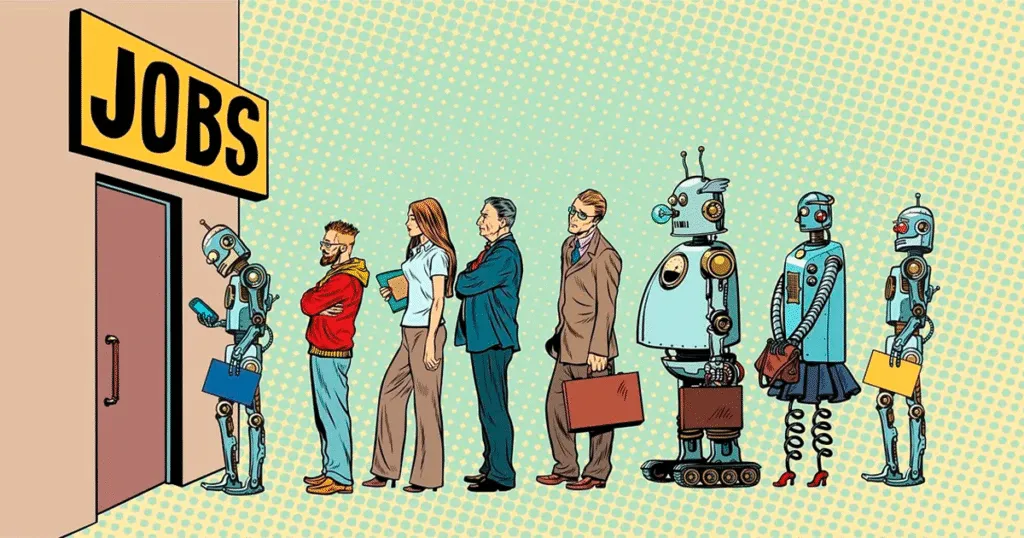
The world of artificial intelligence jobs is changing fast. New roles and skills are popping up every year. As we get closer to 2026, knowing the trends and chances in the industry is key.

The tech industry employment trends show a big move towards high-paying jobs in AI. To keep up, it’s vital to look at the current AI job scene, growth signs, and industry changes.
This article dives deep into the future of AI careers. It covers the most profitable jobs and the skills you’ll need.
Key Takeaways
- The AI job market is expected to grow significantly by 2026.
- New roles and skills are emerging in the field of artificial intelligence.
- High-paying jobs in AI are on the rise.
- Understanding tech industry employment trends is key for future careers.
- Staying ahead in AI employment requires knowledge of growth indicators and industry disruptors.
Understanding the Evolution of AI Employment
Artificial intelligence is changing how we work. It’s important to understand how AI jobs are evolving. This change brings new chances and challenges for workers.
Analyzing Current AI Job Market Trends
Today, there’s a big need for people skilled in AI. This includes machine learning, natural language processing, and computer vision. AI employment trends show a move towards more specific roles. Companies want those who can use AI well.
The number of AI jobs has gone up a lot. This shows we need more skilled workers in this field.

Identifying Key Growth Indicators for 2026
By 2026, AI jobs will grow even more. This is because more industries will use AI and we’ll need more AI experts. Artificial intelligence job trends 2026 will also be influenced by deep learning and AI ethics. Knowing these trends helps us get ready for the future.
Recognizing Industry Disruptors and Their Impact
Technological changes and new rules will change AI jobs. It’s key to know about these changes. This way, we can adjust to the new job market and find new AI opportunities.
AI Job Market 2026: Roles, Salaries, and Skills in Demand – A Complete Forecast
As we near 2026, the AI job market is set to grow a lot. Many roles and skills will be in high demand. The AI job scene will be shaped by key regions, specific sectors, and changing work environments.
Navigating Regional Opportunity Hubs in the US
The US has several key areas leading in AI innovation and job creation. Cities like San Francisco, New York, and Boston are becoming major AI hubs. They offer lots of job chances in machine learning, natural language processing, and computer vision.

Understanding Sector-Specific Growth Projections
Different sectors will see AI job growth at different rates. Healthcare and finance are expected to lead in AI adoption. This means more jobs for experts in these fields. Here are some key growth areas:
- Healthcare AI: 25% growth in diagnostic imaging and patient data analysis
- Financial Services AI: 30% growth in risk management and portfolio optimization
- Manufacturing AI: 20% growth in predictive maintenance and supply chain optimization
Evaluating Remote vs. In-Person AI Career Opportunities
The move to remote work has changed the AI job market. Many companies now offer flexible work options. Remote work offers flexibility and more job chances, but in-person roles might be better for teamwork and networking.
AI professionals can prepare for 2026 by understanding these trends. This will help them succeed in this fast-changing field.
How to Target the Most Promising AI Roles of 2026
Professionals aiming to thrive in the AI boom must know the top roles for 2026. As AI tech advances, new career paths open up in many fields.
Pursuing Technical Career Paths in AI Development
By 2026, technical AI roles will be in high demand. To enter these fields, one needs skills in machine learning, deep learning, and natural language processing. Key areas to focus on include:
- Creating AI algorithms and models
- Working with big datasets to train AI systems
- Applying AI solutions in real-world settings
Exploring AI Leadership and Strategic Positions
The need for AI leadership and strategic roles is growing. Those with AI experience can aim for AI Director or Head of AI Strategy roles. These positions involve:
- Creating AI strategies that match business goals
- Leading AI projects and teams
- Managing the use of AI solutions
Leveraging Domain Expertise for Specialized AI Roles
Combining domain knowledge with AI skills leads to specialized roles across industries. Some examples include:
Healthcare AI Specialists
These experts use AI to enhance healthcare. They develop AI models for disease diagnosis, patient data analysis, and tailored medicine.
Financial AI Analysts
Financial AI analysts apply AI to financial data, predict market trends, and improve investment strategies. They focus on creating and using AI models for financial forecasting.
AI Ethics Consultants
AI ethics consultants ensure AI systems are used responsibly. They create ethical guidelines for AI development and use.
Understanding these promising AI roles helps professionals prepare for the future job market. There are many opportunities in AI, from technical roles to leadership and specialized positions.
Maximizing Your Earning in AI Careers
AI is changing many industries, and those in this field want to earn more. With more demand for AI skills, knowing how to get paid well is key to success.
Benchmarking Salary Expectations by Role and Experience
To earn more, AI pros need to know what they can expect based on their role and experience. Salaries in AI vary a lot, depending on where you work, the industry, and the job itself. For example, AI engineers and machine learning specialists often earn a lot in tech.
Looking at industry reports and salary surveys can help you understand what you might earn.
Negotiating Competitive Compensation Packages
Negotiating a good salary is a must for AI pros. You need to know the market rate for your job and show your value to employers. Mentioning key skills like Python, TensorFlow, or deep learning can help a lot in negotiations.
Capitalizing on Benefits and Stock Options in Tech Companies
Benefits and stock options are big parts of what you get paid in tech companies. Many top tech firms give out lots of stock options, which can add a lot to your pay. Knowing how these options work and their value is important for making more money.
Comparing Corporate vs. Startup Compensation Structures
Choosing between a big company or a startup can affect how you’re paid. Big companies usually offer more stability and benefits, but startups might give you more stock options and chances to grow fast. Thinking about these differences is important for making the right career choice.
Developing Essential Technical Skills for Future AI Success
To do well in the future AI job market, you need strong technical skills. AI is always changing, so you must keep learning. To succeed, focus on getting the right skills.
Mastering Core Programming Languages for AI
Python is key for AI work, and knowing it well is a must. Also, R, Java, and C++ are important. Learning these languages helps you make and use AI models.
Building Expertise in Machine Learning Frameworks
Frameworks like TensorFlow, PyTorch, and Scikit-learn are vital for AI. Knowing these frameworks lets you create and use advanced AI models. It’s important to know what each framework does best.
Acquiring Data Engineering and Analytics Capabilities
Data engineering and analytics are key for AI. You need to know how to set up and manage data systems and analyze big data. Skills in data engineering are key for getting data ready for AI models.
Understanding AI Infrastructure and Cloud Computing
AI infrastructure and cloud computing change how we use AI. Knowing cloud platforms like AWS, Azure, and Google Cloud is important. Being able to use cloud computing for AI is a valuable skill.
| Technical Skill | Description | Importance Level |
|---|---|---|
| Programming Languages | Python, R, Java, C++ | High |
| Machine Learning Frameworks | TensorFlow, PyTorch, Scikit-learn | High |
| Data Engineering | Data pipelines, data analysis | Medium |
| Cloud Computing | AWS, Azure, Google Cloud | High |
Cultivating Non-Technical Abilities That Employers Will Value
While technical skills are key for AI careers, employers now value non-technical skills more. As AI spreads across industries, the need for people who can develop, implement, and manage AI grows.
Developing Cross-Functional Collaboration Skills
AI projects need teams with data scientists, engineers, and business folks. Cross-functional collaboration is key to align AI with business goals and ensure success. Those who connect technical and non-technical teams are highly sought after.
Enhancing Problem-Solving and Critical Thinking
AI pros must be good at problem-solving and critical thinking. These skills help them find new solutions and solve tough problems. They learn to analyze data, spot patterns, and make smart choices.
Building Effective Communication for Technical Concepts
It’s vital to share complex tech ideas with non-tech folks. Effective communication skills make it easy to share AI insights and advice. This helps in making better decisions.
Practicing Responsible AI Development and Governance
As AI spreads, responsible AI development and governance matter more. Pros need to think about ethics, be transparent, and set up rules to avoid AI risks.
| Non-Technical Skill | Importance in AI Careers |
|---|---|
| Cross-Functional Collaboration | Aligns AI solutions with business objectives |
| Problem-Solving and Critical Thinking | Drives innovation and troubleshooting |
| Effective Communication | Facilitates clear presentation of AI insights |
| Responsible AI Development | Ensures ethical and transparent AI practices |
“The future of AI isn’t just about technology; it’s about how we use it to enhance human capabilities and create a more equitable society.”
Charting Your Educational Path to AI Career Readiness
To succeed in AI, you need a well-planned educational path. This path should match what the industry needs. You’ll need to choose the right degree programs, certifications, and skill-building opportunities.
Degree Programs and Specializations
Picking the right degree program is key for a strong AI foundation. Specializations in machine learning, data science, and computer science are very valuable. Today, universities offer AI programs that cover both tech and ethics.
Earning Industry-Recognized AI Certifications
AI certifications boost your credibility and job chances. Getting certifications from big names like Google, Microsoft, or Stanford shows you know your stuff.
Utilizing Online Learning Platforms and Resources
Online platforms like Coursera, edX, and Udacity make AI learning easy and affordable. They offer courses and nanodegrees that fit your career goals.
Participating in AI Research and Open Source Projects
Getting involved in AI research or open source projects gives you real-world experience. It boosts your skills and shows your dedication to AI.
| Educational Path | Description | Benefits |
|---|---|---|
| Degree Programs | Formal education in AI or related fields | Comprehensive knowledge, recognized qualification |
| AI Certifications | Specialized certifications in AI technologies | Enhanced credibility, demonstrated expertise |
| Online Learning | Flexible, self-paced learning options | Accessibility, affordability, continuous learning |
| Research & Open Source | Hands-on experience through projects | Practical skills, network opportunities, innovation |
Creating a Strategic Career Plan for AI Job Market Success
To succeed in the AI job market of 2026, you need a solid career plan. This plan should focus on skill building, networking, and personal branding.
Building a Portfolio That Showcases Your AI Capabilities
A strong portfolio is key to showing off your AI skills. Include projects that show your machine learning, data analysis, and problem-solving abilities. Share your work on GitHub or Kaggle to impress employers.
Make sure your portfolio matches the AI roles you’re aiming for, like development, research, or leadership. This will make you stand out in a competitive field.
Establishing a Professional Network in the AI Community
Having a professional network is vital for job opportunities and staying updated on trends. Go to AI conferences, join online forums, and attend local meetups to meet other professionals.
Be active in your network by sharing your knowledge and experiences. This will help you build strong relationships and be seen as an expert in AI.
Leveraging Social Media and Personal Branding
Social media, like LinkedIn and Twitter, is great for personal branding. Build a strong online presence by sharing your achievements, engaging with industry content, and joining discussions.
Being consistent is important for personal branding. Keep your online profiles updated and show your professional goals and values.
Preparing for AI-Specific Interview Processes
AI job interviews often include technical challenges and problem-solving. Practice coding on LeetCode or HackerRank and know common AI interview questions.
Be prepared to talk about your projects and experiences in depth. Show how your work has made an impact and how it fits the AI roles you’re applying for.
Exploring Industry-Specific AI Career Opportunities
AI is changing many industries, opening up new career paths. It’s creating new jobs and making old ones better in many fields.
Breaking Into Healthcare and Biotech AI Roles
The healthcare and biotech fields are using AI for research, diagnosis, and personalized medicine. Jobs include analyzing medical images, finding new drugs, and working with health data.
Pursuing Financial Services and Banking AI Positions
AI is changing finance by managing risks, finding fraud, and improving trading. Jobs in financial AI include making predictions, helping customers with chatbots, and improving investment plans.
Targeting Manufacturing and Supply Chain AI Careers
AI is making manufacturing and supply chains better with predictive maintenance and smart inventory. Jobs include automating processes and analyzing supply chains.
Exploring Creative and Entertainment AI Applications
The creative and entertainment worlds are using AI for making content, giving recommendations, and engaging audiences. Jobs include AI-assisted content, virtual reality, and entertainment platforms.
Knowing about these AI career paths helps professionals choose the right path. It lets them take advantage of the growing need for AI skills.
Conclusion: Taking Action on Your AI Career Journey
The AI job market is always changing. To grow in your career, you need to keep up with these changes. Knowing the trends, roles, and skills needed for AI jobs helps you move forward.
The future of AI is exciting, with new technologies and innovations coming up. To make the most of these, you should plan your career, learn the skills that are in demand, and be ready to adapt to new situations.
This article offers valuable advice to help you reach your AI career goals. Whether you’re just beginning or looking to move up, success comes from staying informed, being proactive, and taking advantage of what the AI job market offers.
FAQ
What are the most in-demand AI roles in 2026?
In 2026, top AI roles will include AI development, machine learning engineering, and data science. AI ethics consulting, healthcare AI specialists, and financial AI analysts will also be sought after. AI research scientists will also be in high demand.
What skills are required for AI careers?
AI careers need both technical and non-technical skills. Technical skills include programming languages like Python, Java, and C++. You also need to know machine learning frameworks, data engineering, and cloud computing.Non-technical skills are just as important. These include teamwork, problem-solving, critical thinking, and good communication.
How can I maximize my earning in AI careers?
To earn more in AI careers, start by knowing what you’re worth. Then, negotiate a good salary and benefits. Tech companies often offer stock options and other perks.Understanding the difference between corporate and startup pay can also help you make better choices.
What educational paths can lead to AI career readiness?
To get ready for AI careers, look into degree programs in AI, machine learning, and data science. Getting AI certifications and using online learning platforms can also help.Joining AI research and open source projects is another way to prepare.
How can I create a strategic career plan for AI job market success?
For AI job market success, build a portfolio that shows your AI skills. Connect with the AI community and use social media for your career. Preparing for AI interviews is also key.
What are the growth prospects for AI careers in different industries?
AI is changing many industries, opening new career paths. Healthcare, finance, manufacturing, and entertainment are expected to grow a lot.
What is the outlook for AI job market growth in 2026?
The AI job market is set to grow a lot in 2026. This growth comes from more demand for AI skills and talent. Those with the right skills will find great opportunities.
How can I stay up-to-date with the latest developments in AI?
To keep up with AI, go to industry conferences and follow AI news. Join online AI communities and forums to stay informed.