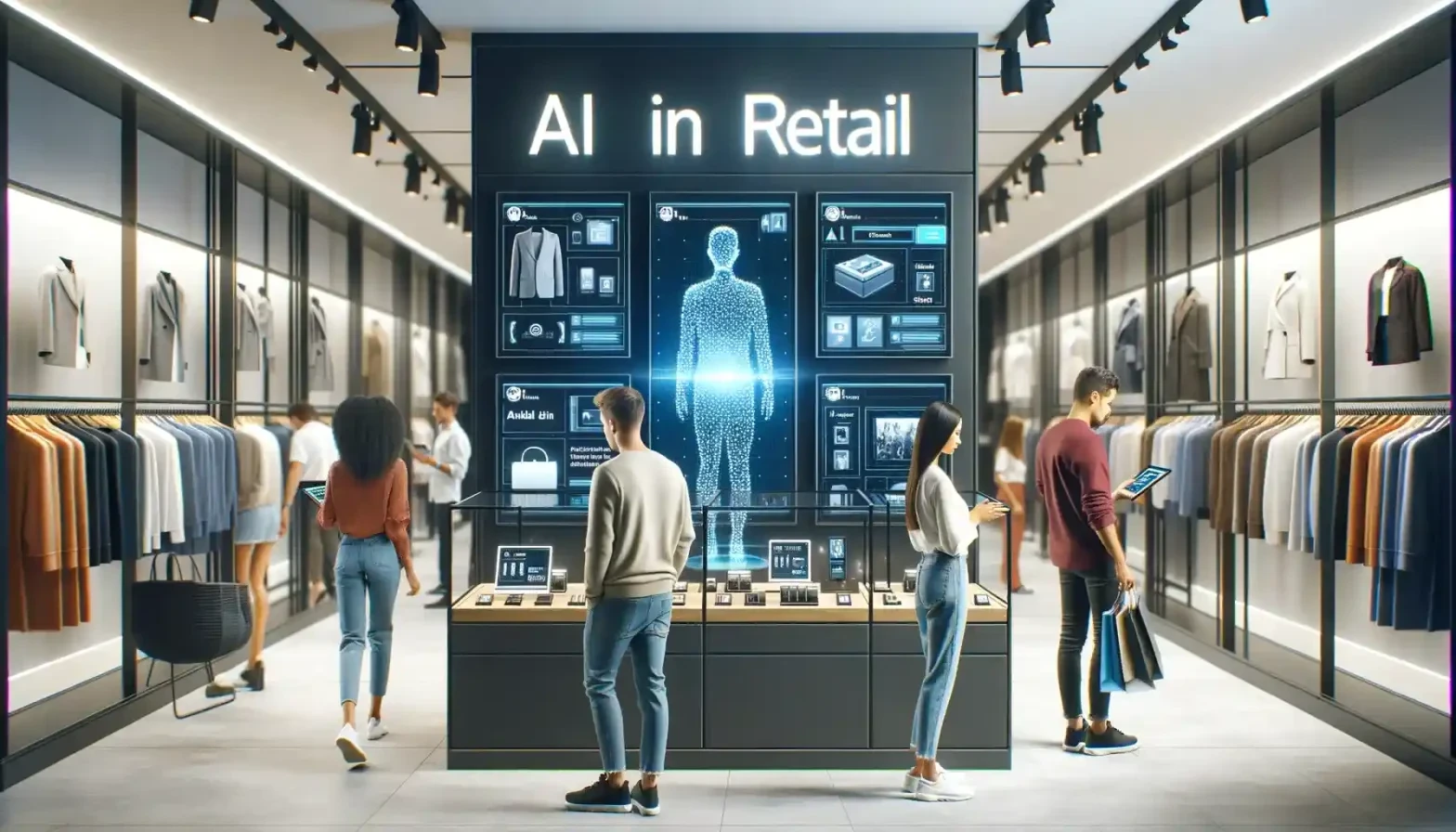
The retail world is changing fast, thanks to artificial intelligence and smart technology. These new tools are making shopping experiences more personal and fun.

With retail innovation, companies can give customers exactly what they want. They can make checkout easier and make everyone happier. This is making shoppers more loyal and coming back for more.
Key Takeaways
- The retail industry is being transformed by AI and smart technology.
- Personalized shopping experiences are becoming the norm.
- Retail innovation is driving customer satisfaction and loyalty.
- Streamlined checkout processes are making shopping better.
- Businesses are seeing more customers stay with them.
The Current State of Retail Technology
The retail world is changing fast with new tech. This change aims to make shopping better, run stores smoother, and keep up with the market.
From Traditional to Digital Retail Transformation
Stores are moving from old ways to new digital ones. This means using tech to connect better with shoppers. Key parts of this change include:
- Setting up online shops and digital payment options
- Using data to know what shoppers like
- Using AI for ads that fit each shopper’s taste
This change is more than just new tech. It’s about making stores more focused on customers and quick to adapt.
How AI is Reshaping Consumer Expectations
AI is changing what shoppers want. It helps stores offer custom experiences, better service, and run smoother. For example:
| AI Application | Impact on Consumer Expectations |
|---|---|
| Personalized Recommendations | Shoppers want products picked just for them, based on what they like and buy. |
| Chatbots and Virtual Assistants | People want fast, smart help from AI chatbots. |
| Inventory Management | Shoppers expect to find what they need, thanks to AI managing stock. |

By keeping up with these shifts, stores can meet shopper needs and stay on top in the market.
AI in Retail: Enhancing Shopping Experiences With Smart Technology
The use of AI in retail is changing how we shop. It makes shopping more personal, efficient, and fun. This is because of the need for better customer experiences.
Essential AI Technologies for Modern Retailers
Today’s retailers use AI to improve shopping. They use chatbots for customer service, predictive analytics for inventory management, and visual recognition systems for personalized marketing. These tools help retailers give customers what they want, making them happier and more loyal.

Measuring the Impact on Customer Satisfaction and Sales
It’s important for retailers to see how AI works. They should look at things like customer retention, sales, and how happy customers are. These numbers tell a lot about how well AI is doing.
| KPI | Description | Impact of AI |
|---|---|---|
| Customer Retention Rate | Percentage of customers retained over a period | Increased through personalized experiences |
| Sales Conversion Rate | Percentage of customers who make a purchase | Improved through targeted marketing |
| Customer Satisfaction Score | Measure of customer satisfaction through surveys | Enhanced through efficient service |
By looking at these numbers, retailers can make their AI better. This helps them keep customers happy and boost sales.
How to Implement Computer Vision for Visual Merchandising
Retailers are using computer vision to make shopping better. This tech helps them understand how customers interact with products. They can then use this info to improve store layouts and displays.
Setting Up Smart Cameras and Visual Recognition Systems
To use computer vision well, retailers must set up smart cameras and systems. They need to pick the right hardware and link it with advanced software.
Hardware Requirements and Installation Guide
They need high-quality cameras with wide lenses and enough storage for video. Cameras are placed around the store to catch all customer actions.
Software Integration Steps
Next, they use computer vision algorithms to look at the video. This includes steps like preparing data, finding objects, and analyzing behavior. They can use ready-made models or create their own.
Analyzing Customer Interactions with Products
Computer vision helps retailers see how customers act with products. They can see how often people pick up items or how long they look at displays.
“The use of computer vision in retail is not just about surveillance; it’s about understanding customer behavior and creating a more personalized shopping experience.”
— Retail Tech Expert
Optimizing Store Layouts Based on Visual Data
By looking at customer data, retailers can make their stores better. They can move products around, change aisle sizes, or highlight certain areas.
| Store Layout Element | Optimization Strategy | Expected Outcome |
|---|---|---|
| Product Displays | Place high-demand products at eye level | Increased sales |
| Aisle Widths | Adjust widths based on customer flow | Improved customer experience |
| Focal Points | Create attractive displays to draw customers | Enhanced customer engagement |
Creating Personalized Shopping Experiences with AI
AI is leading the way in making shopping more personal. It helps retailers understand what customers like and want. This way, they can give better recommendations and services.
Building Complete Customer Profiles
To make shopping personal, retailers must know their customers well. They gather and study data from many places.
Data Collection Methods
They track how customers interact online and in apps. They also look at what they buy and what they like on social media. A McKinsey study found that using data to understand customers can boost sales by up to 20%.
Privacy-Compliant Analysis Techniques
It’s important to keep customer data safe and private. Retailers must use methods that protect customer info. Forbes says that companies that value data privacy earn more customer trust.
Implementing and Training Recommendation Engines
Recommendation engines are key for personal shopping. They suggest products based on what customers like. For example, Amazon uses one that helps a lot with sales.
To train these engines, they need lots of data. The more data, the better their suggestions get.
A/B Testing Personalization Strategies
A/B testing helps improve personalization. It lets retailers see which strategies work best. For instance, they might test personalized emails against generic ones.
As
“Personalization is not just about addressing customers by their names; it’s about understanding their needs and preferences to deliver relevant experiences.”
By always testing and improving, retailers can make customers happier and increase sales.
Deploying Conversational AI for Customer Service
Conversational AI is now key for top-notch customer service in retail. It lets retailers offer personalized and efficient support. This makes shopping better for everyone.
Selecting and Customizing AI Assistant Platforms
It’s important to pick the right AI assistant platform for customer service. Look for ones that let you customize the AI to fit your needs. Important features include working well with CRM systems, growing with your business, and being easy to use.
Training Your Retail Chatbots with Industry-Specific Knowledge
Teaching chatbots about your industry is key for good customer support. Give them data on your products, services, and what customers often ask. This way, chatbots can handle many customer questions well.
Creating Omnichannel AI Support Systems
Building an AI support system that works across all touchpoints is essential. This means support on social media, websites, and mobile apps should be smooth. Use AI that can work with many channels for a unified customer service experience.
| Feature | Description | Benefit |
|---|---|---|
| Customization | Tailoring AI to specific retail needs | Enhanced customer experience |
| Industry-specific training | Feeding chatbots relevant retail data | Accurate customer support |
| Omnichannel support | Integrating AI across multiple channels | Seamless customer service |
Implementing Predictive Inventory Management Systems
Predictive inventory management is changing the retail world with AI. It helps retailers guess demand better, cut down on stockouts, and avoid overstock. By using these systems, retailers can work more efficiently and make customers happier.
Setting Up AI-Powered Demand Forecasting Models
The key to predictive inventory management is AI-powered demand forecasting. These models look at past sales, trends, and outside factors like weather and economy to guess future demand.
Data Requirements and Sources
To make demand forecasting work, retailers need to collect and mix data from different places. This includes past sales, customer habits, market trends, and outside data like weather and economy. Having the right and complete data is key for making good models.
Model Selection and Training
Retailers must pick the right demand forecasting model for their business and data. Models like ARIMA, exponential smoothing, and machine learning are common. It’s important to train and test these models well to make sure they’re accurate.
Automating Inventory Replenishment Workflows
With demand forecasting models ready, retailers can automate inventory replenishment. This means linking the models with inventory systems to order more stock when needed. Automation cuts down on mistakes and makes sure stock is replenished on time, helping to keep sales up and stockouts down.
Measuring and Optimizing Inventory Accuracy
To make predictive inventory management work, retailers must keep checking and improving inventory accuracy. This means comparing actual stock with what was predicted and tweaking the models as needed. Important metrics like inventory turnover and stockout rates help see how well inventory management is doing.
By using predictive inventory management, retailers can see big improvements in stock accuracy, lower costs, and happier customers. As AI gets better, so will the tools for managing inventory, helping retailers to do even better.
Enhancing Physical Store Navigation with Smart Technology
Smart technology is changing how we shop in physical stores. It makes shopping easier and more fun. By using indoor positioning, digital maps, and smart shelves, stores can make shopping better.
Implementing Indoor Positioning and Wayfinding Systems
Indoor positioning and wayfinding systems help customers find their way in big stores. They use Bluetooth, Wi-Fi, and GPS to guide you. This means you get personalized directions to what you need, making shopping easier.
- Improved customer satisfaction through precise navigation
- Enhanced ability to track customer movements and preferences
- Increased efficiency in locating products
Developing Interactive Digital Store Maps
Interactive digital store maps make finding products easy. You can use them on your phone or at in-store kiosks. Stores can also use these maps to highlight promotions and offers, making shopping even better.
Installing and Programming Smart Shelf Technology
Smart shelves have sensors and displays that show product info in real-time. They can show stock levels, product details, and special offers. This technology makes shopping more interesting and helps stores manage their stock better.
“The future of retail lies in creating seamless, intuitive experiences that blend the digital and physical worlds.”
— Retail Expert
By using these smart technologies, stores can make shopping easier and more fun. As retail changes, using these technologies will help stores stay ahead and meet customer needs.
Overcoming Implementation Challenges and Privacy Concerns
Using AI in retail comes with its own set of hurdles. Retailers face both technical and operational challenges when integrating AI.
Addressing Common Technical Obstacles
Technical issues like system compatibility and data integration are common. Ensuring seamless integration with existing systems is key. Retailers need a strong IT setup and should team up with experienced AI providers.
Ensuring Customer Data Protection and Compliance
AI uses customer data, so protecting data and following rules like GDPR is critical. Retailers must have strong data protection and be open about how they use data.
Training Staff to Work Alongside AI Systems
Staff must learn to work with AI systems for successful implementation. Comprehensive training programs are vital. They help employees grasp AI’s strengths and weaknesses.
By tackling these challenges, retailers can smoothly adopt AI. This leads to better customer experiences and more efficient operations.
Conclusion: Preparing for the Next Wave of Retail Innovation
The retail world is changing fast, thanks to AI and smart tech. These tools are making shopping better, running stores more smoothly, and changing what customers want.
Retailers who use AI will stay ahead in the game. They can offer unique shopping experiences, run their stores better, and boost sales. This is all thanks to tech like computer vision, chatbots, and smart inventory systems.
The future of retail will keep getting smarter. As AI grows, stores need to stay quick to change and meet new customer needs.
Stores that invest in AI and smart tech will grow, make customers happier, and stay competitive. The next big changes in retail are coming, and those ready will do well.
FAQ
What is the role of AI in retail?
AI in retail makes shopping better with smart tech. It boosts customer happiness and sales. It offers personalized advice, chatbots, and smart inventory management.
How is AI transforming the retail industry?
AI changes retail by making shopping personal and efficient. It helps retailers make smart choices with data. It also changes how they talk to customers, manage stock, and arrange stores.
What are the benefits of using AI-powered recommendation engines in retail?
AI engines suggest products that fit what customers like. This boosts sales and makes customers happier. They use data on what customers buy and how they act.
How can retailers implement AI solutions effectively?
Retailers should pick areas where AI helps, like customer service or stock management. They also need to train staff to work with AI.
What are the challenges associated with implementing AI in retail?
Using AI in retail faces technical hurdles and data protection issues. Retailers must also train staff and consider costs and ROI.
How can retailers measure the impact of AI on customer satisfaction and sales?
Retailers can track KPIs like customer retention and sales growth. They can also test AI solutions against old methods.
What is predictive inventory management, and how does it work?
Predictive inventory management uses AI to forecast sales and manage stock. It looks at past sales and trends to keep the right products in stock.
How can retailers ensure customer data protection and compliance when using AI?
Retailers must protect data and follow rules like GDPR. They should be open with customers about data use.
What is the future of retail innovation, and how will AI shape it?
AI will keep making retail better with more personal and efficient shopping. We’ll see new tech like advanced visual recognition and better customer service across all channels.