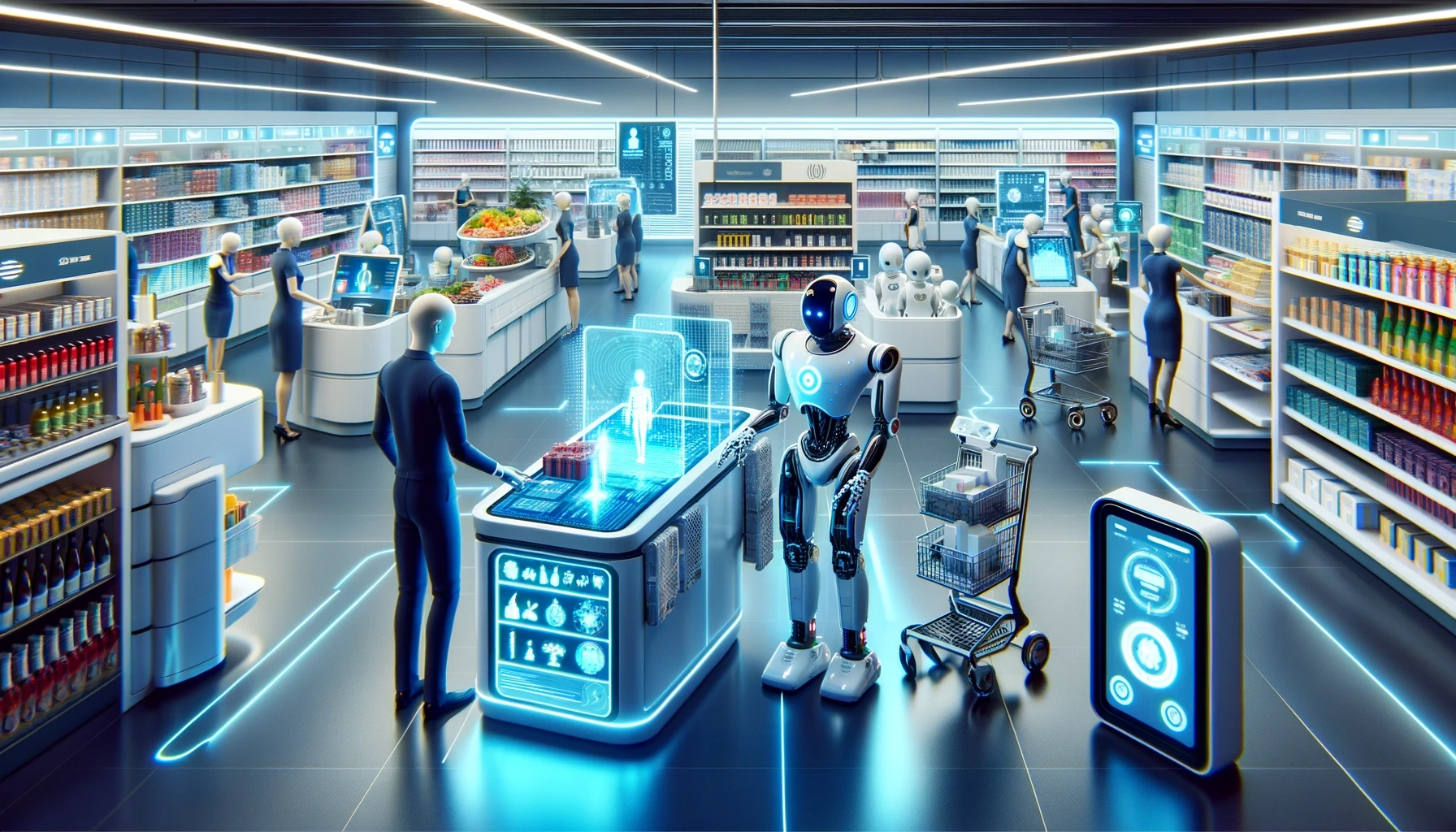
The e-commerce world is changing fast, thanks to artificial intelligence (AI). AI is now a big part of online shopping, from finding products to getting them delivered. It’s making businesses run better and focus more on what customers want.

E-commerce AI technology is making shopping better for everyone. It gives customers products they might like, helps manage stock, and makes getting orders easier. The impact of artificial intelligence on e-commerce is huge. It lets companies understand lots of data, guess what customers will want, and make smart choices.
Key Takeaways
- AI is transforming e-commerce by making shopping better and running businesses smoother.
- E-commerce AI technology is used for finding the right products and managing stock better.
- AI helps businesses make choices based on data.
- Artificial intelligence is changing how orders are fulfilled, making it quicker and more reliable.
- The future of e-commerce depends on keeping up with and using more AI.
The AI Revolution in E-commerce
E-commerce is on the verge of a big change thanks to AI. Machine learning and natural language processing are at the forefront. They are making online shopping more efficient, tailored, and competitive.
Current State of AI Adoption in Online Retail
AI is becoming more popular in e-commerce. Businesses are using it to improve customer service, streamline operations, and boost sales. The trend shows AI will keep growing, changing the industry a lot.
Key Technologies Driving the Transformation
Several key technologies are leading the AI revolution in e-commerce:
- Machine Learning and Deep Learning: They help with predictive analytics, personalized suggestions, and automated customer service.
- Natural Language Processing: It makes advanced search, chatbots, and voice commerce possible.
- Computer Vision: It’s changing how we analyze product images, search visually, and manage inventory.
These technologies are not just improving customer experiences. This makes e-commerce businesses more flexible and competitive.

As AI keeps improving, its effect on e-commerce will only get stronger.
How AI Is Changing E-commerce: Product Research to Fulfillment
AI is changing the e-commerce world by making different parts of the value chain better. The e-commerce world is complex, with many steps from finding products to delivering them. Knowing how AI fits into this system is key for businesses to stay ahead.
Overview of the E-commerce Value Chain
The e-commerce value chain includes important steps like finding products, making them, marketing, selling, and delivering. AI-driven product research helps spot trends and what customers like. By looking at data from these steps, companies can understand what customers want.

AI Integration Points Throughout the Customer Journey
AI can be used in many ways in the customer journey, like suggesting products, helping with customer service, and AI in supply chain management for better delivery. These uses make the customer experience smoother and more personal.
Benefits of End-to-End AI Implementation
Using AI all the way through the e-commerce value chain brings many benefits. It makes operations more efficient, improves customer experience, and helps make better decisions with data. Companies can get ahead by using AI-driven insights to guide their plans.
By knowing the e-commerce value chain and where AI fits in, businesses can use AI to change how they work and make customers happier. The advantages of using AI all the way through are many, helping e-commerce businesses grow and succeed.
AI-Powered Product Research and Discovery
This change is key for businesses to keep up in a fast-changing market.
Implementing Machine Learning for Market Trend Analysis
Machine learning looks at lots of data to spot market trends. This helps businesses make smart choices about what to make and how to market it. By using these insights, companies can stay ahead of the competition and grab new trends.
Setting Up Competitive Intelligence Automation
AI helps gather and analyze data on what competitors are doing. This info is super useful for businesses wanting to refine their product offerings and get a better spot in the market.
Using AI for Product Opportunity Identification
AI finds new product chances by looking at what people do, market trends, and what competitors are up to. It uses smart analytics and learning to find market gaps for new or better products.
Gap Analysis Tools
AI-powered gap analysis gives deep insights, helping businesses plan their product development.
Consumer Sentiment Analysis
Consumer sentiment analysis looks at what customers say to understand what they like and dislike. AI can handle lots of customer feedback to give useful tips for making and marketing products.

| AI Application | Benefits |
|---|---|
| Machine Learning for Market Trend Analysis | Identifies emerging trends, informs product development |
| Competitive Intelligence Automation | Gathers competitor data, improves market positioning |
| Product Opportunity Identification | Uncovers new product opportunities, fills market gaps |
Transforming Product Development with AI
AI is changing how companies design, test, and launch products. It helps create innovative products faster and makes customers happier. AI boosts each step of product development, from design to final testing.
Integrating AI-Driven Product Design and Testing
AI uses machine learning to design and test products. This lets companies try many designs and pick the best ones fast. AI looks at customer feedback, market trends, and product data to guide design, making products that customers want.
Applying Predictive Analytics for Product Success
Predictive analytics helps guess how well a product will do. AI looks at past data, trends, and customer behavior. This helps businesses make smart choices about product development and launch, lowering the chance of failure.
A/B Testing Automation for Product Features
A/B testing is key in product development. It compares different features to find the best ones. AI automates this by checking how customers react to different versions. This lets businesses keep improving their products based on what customers say.
| AI Application | Benefits |
|---|---|
| AI-Driven Design | Innovative designs, reduced development time |
| Predictive Analytics | Data-driven decisions, reduced risk |
| A/B Testing Automation | Optimized product features, improved customer satisfaction |
Revolutionizing Inventory Management
AI is changing how e-commerce companies manage their stock. It uses machine learning and predictive analytics to improve inventory management. This makes it easier for businesses to keep their stock levels just right.
Setting Up Demand Forecasting with Machine Learning
Demand forecasting is key in inventory management. Machine learning looks at past sales, trends, and outside factors to guess future demand. This helps businesses keep the right amount of stock, avoiding too little or too much.
Implementing Automated Inventory Optimization
AI helps manage inventory by always checking and adjusting stock levels. It uses real-time data to keep stock levels in sync with demand. This cuts down on waste and boosts efficiency.
Strategies for Preventing Stockouts and Overstock Situations
E-commerce companies can use AI to avoid stockouts and overstock. They can use dynamic safety stock management and just-in-time inventory replenishment. These AI-powered strategies keep inventory balanced, meeting customer demand without high costs.
Enhancing Customer Experience with AI
AI is changing how we shop online. It lets businesses give customers unique and fun experiences. This is thanks to AI’s advanced tech.
Building Personalized Product Recommendation Systems
AI makes shopping better by suggesting products just for you. This way, it finds items you might like, boosting your chances of buying.
Deploying AI Chatbots and Virtual Shopping Assistants
AI chatbots and virtual assistants are changing online shopping. They offer instant support and help you find your way around websites.
Implementing Visual Search and Voice Commerce
With image recognition technology, you can find items by uploading pictures or using your camera.
Image Recognition Integration
This tech lets you search for similar products easily. It makes shopping more fun and straightforward.
Voice Assistant Compatibility
Voice commerce lets you shop with just your voice. AI-powered voice assistants make it easy and quick.
AI in Pricing and Promotion Strategies
The use of AI in e-commerce pricing strategies is changing how businesses price their products. AI uses advanced algorithms to adjust prices in real-time. It responds to market changes, customer behavior, and what competitors are doing.
Developing Dynamic Pricing Algorithms
Dynamic pricing algorithms are a big part of AI in e-commerce. They look at lots of data like past sales and current demand. This helps businesses set the best price for their products at any time.
By continuously adjusting prices, companies can make more money.
Creating Personalized Discount Optimization Systems
AI helps create personalized discount optimization systems. It looks at customer data and behavior to find the best discounts for each person. This makes shopping better and increases chances of buying.
This approach to pricing can really help keep customers coming back. It makes them feel valued and loyal.
Tools for Automated Competitor Price Monitoring
These tools keep an eye on what competitors are charging. This lets businesses adjust their prices to stay competitive.
By using AI for pricing, e-commerce businesses can get ahead. They can make more money and make customers happier.
Streamlining Order Processing with AI
Using AI to improve order processing is key for e-commerce success. AI helps make order systems more efficient and accurate. This is a big advantage for online stores.
Automated Order Routing and Processing
AI makes automated order routing and processing possible. It uses machine learning to send orders to the best places. This depends on things like stock levels, shipping costs, and delivery times.
This automation cuts down on mistakes, speeds up processing, and makes customers happier.
AI-Based Fraud Detection and Prevention
AI systems check transactions in real-time for fraud signs. This way, e-commerce sites can lower fraud risks, protecting everyone involved.
Optimizing Payment Processing with Machine Learning
It uses machine learning to find the best payment paths. This lowers costs, boosts payment success, and makes shopping better for customers.
AI solutions help e-commerce sites process orders better, save money, and please customers more.
AI-Driven Fulfillment and Logistics
AI technologies are changing how businesses handle fulfillment and logistics. They use advanced algorithms and machine learning. This makes e-commerce operations more efficient.
Implementing Warehouse Automation and Robotics
AI is making a big difference in warehouse automation. Robotics and automated systems are being used more. A report by Grand View Research says the market will hit USD 30.8 billion by 2025.
- Improved inventory management
- Reduced labor costs
- Increased order fulfillment accuracy
Developing Route Optimization for Delivery
It analyzes traffic data and predicts the best routes. This cuts down delivery times and lowers costs.
“The use of AI in route optimization can lead to a reduction in delivery costs by up to 15%.” –
Autonomous Delivery Vehicles
These vehicles use AI to find the best routes.
Drone Delivery Systems
Amazon and UPS are using drones for fast delivery in hard-to-reach places.
By using automation, route optimization, and new delivery methods, businesses can do better. They can serve customers better and work more efficiently.
Conclusion: The Future of AI in E-commerce
The e-commerce world is on the verge of a big change, thanks to AI. AI is changing how we do everything in e-commerce, from finding and making products to getting them to customers.
AI’s future in e-commerce looks bright, with chances to use it for things like predicting sales and making ads personal. This will help drive new ideas and trends in e-commerce.
AI will greatly change how e-commerce works, making things more efficient and better for customers. As AI gets even smarter, it will become a key part of e-commerce. It will help businesses grow and stay ahead of the competition.
By using AI and staying up-to-date, e-commerce companies can thrive in a fast-changing world. They can use AI to grow and innovate in the future.
FAQ
How is AI changing the e-commerce industry?
AI is changing e-commerce by making product research better. It offers personalized product suggestions, AI chatbots, and visual search.
What are the benefits of implementing AI in e-commerce?
AI brings many benefits to e-commerce. It makes product discovery easier and enhances customer experience. It can reduce costs and improve competitiveness.
How does AI-powered product research work?
AI-powered product research uses machine learning. It analyzes market trends, consumer behavior, and competitor activity. This helps businesses find product opportunities and predict demand.
What is the role of AI in inventory management?
AI is key in inventory management. It helps predict demand and optimize inventory levels. This prevents stockouts and overstock situations.AI uses machine learning to analyze sales data and trends. It makes accurate predictions.
How can AI enhance customer experience in e-commerce?
AI can make customer experience better in e-commerce. It helps businesses understand customer behavior and needs.
What are the applications of AI in e-commerce fulfillment?
AI has many uses in e-commerce fulfillment. It automates order routing and processing. This reduces costs and improves delivery times.
How is AI being used in e-commerce logistics?
AI is used in e-commerce logistics for route planning and warehouse automation.
What is the future of AI in e-commerce?
The future of AI in e-commerce looks bright. Advances in machine learning, natural language processing, and computer vision are expected. We’ll see more innovative uses of AI in e-commerce.



1 thought on “How AI Is Changing E-commerce: Product Research to Fulfillment”