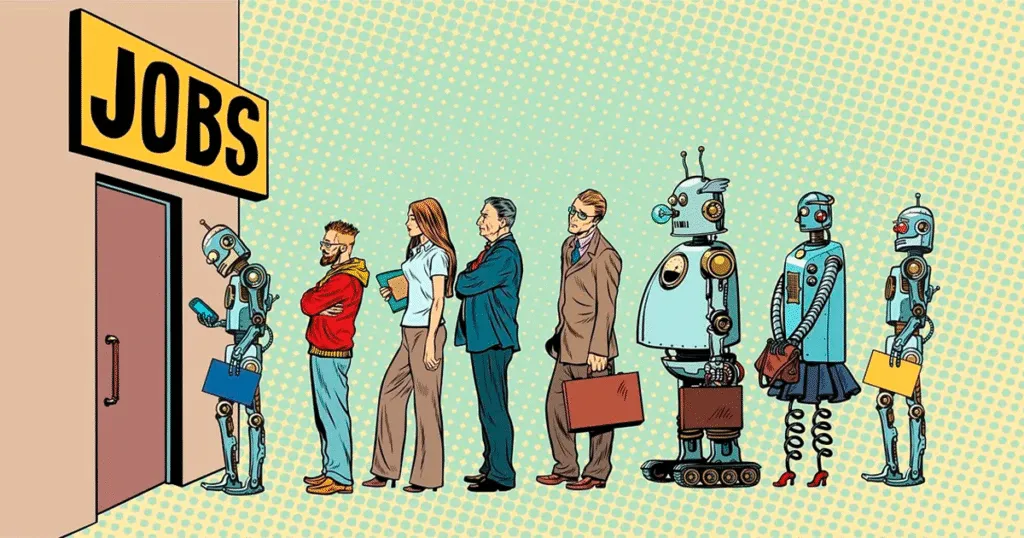
Artificial intelligence (AI) is changing the job market fast. Automation and machine learning are making big changes in how we work.
AI is being used in many fields, causing job market disruption. This brings both new chances and problems. Some jobs are disappearing, but new ones are popping up that need skills in AI and data.
The future of work with AI is a big topic of discussion. As the job market keeps changing, it’s key to know how AI affects jobs.
Key Takeaways
AI is transforming the job market through automation and machine learning.
Job market disruption is creating new opportunities and challenges.
New jobs are emerging that require specialized skills in AI and data analysis.
The future of work with AI is a topic of ongoing debate.
Understanding AI trends and implications is critical for navigating the changing job market.
Understanding the AI Revolution in Employment
The AI revolution is changing how we work. It brings both challenges and opportunities. Let’s explore what’s happening in the workplace.
Current State of AI in the Workplace
AI is being used in many industries. It automates tasks and boosts productivity. Companies use AI to make operations smoother, work better, and innovate.
Key Statistics on AI and Employment
AI’s effect on jobs is shown in some numbers. These numbers talk about jobs lost and jobs gained.
Job Displacement Figures
Studies say millions of jobs might be lost to automation by 2030. But, this number changes based on the industry and area.
New Job Creation Data
AI also brings new job chances. Jobs like AI development, deployment, and management are growing. The need for AI experts is increasing, with new roles appearing.
Jobs Most Vulnerable to AI Disruption
AI technology is getting better, making some jobs at risk. AI can now do tasks that humans used to do. This makes people worry about their jobs in many fields.
Routine and Repetitive Task Positions
Jobs that are the same every day are at high risk. Tasks like data entry, bookkeeping, and assembly line work can be done by AI. This means humans might lose their jobs in these areas.
Data Processing and Analysis Roles
AI is making data analysis better, but it’s also a threat. It can do complex data tasks, which might replace jobs that just process data.
Customer Service and Support Functions
AI is changing customer service jobs, like chatbots and virtual assistants. These tools can answer many customer questions. This might mean fewer jobs for people in customer support.
How to Evaluate Your Position’s Risk
To see if your job might be at risk from AI, think about a few things:
Is your job something that can be done over and over again?
Does your job need creativity and problem-solving?
Does your job involve talking to people and understanding their feelings?
Job Category
Risk Level
Reason
Data Entry Clerk
High
Tasks are repetitive and easily automated.
Customer Service Representative
Medium
Some tasks can be automated, but human empathy is valued.
Data Analyst
Medium
While data analysis can be automated, human interpretation is needed.
Knowing these points can help you get ready for AI’s impact on jobs.
Growing Opportunities in the AI Era
AI is changing many industries, creating new jobs. As AI gets better, we need more people to work with it. This includes those who can develop, manage, and use AI systems.
AI Development and Management Positions
More jobs are coming up in AI development and management. These roles need people who can design, set up, and watch over AI solutions. They must have technical skills and know how to lead AI projects and teams.
Human-AI Collaboration Roles
Jobs that focus on working with AI are becoming more common. These roles help make sure AI and humans work well together. This improves how things get done and helps make better decisions.
Creative and Emotional Intelligence-Based Jobs
Jobs that need creativity and emotional smarts are safe from AI takeover. These include jobs for artists, designers, and counselors. They rely on skills that humans have, not machines.
How to Identify Emerging Opportunities
To find new chances in the AI world, keep up with trends and learn skills that go well with AI. Here are some important areas to work on:
Learn technical skills for AI and data analysis
Work on soft skills that AI can’t replace
Keep up with how AI is used in your field
Skill
Relevance to AI Era
Growth Potencial
Data Analysis
High
High
Creative Problem Solving
High
Medium
Emotional Intelligence
High
High
The Impact of Artificial Intelligence on the Job Market: Trends and Forecasts
Artificial intelligence is changing the job market in big ways. It’s causing short-term changes and long-term shifts. Knowing how AI affects jobs is key for everyone involved.
Short-term Employment Shifts
In the short term, AI will lead to big changes in jobs. Jobs that involve routine data processing, customer service, and certain manufacturing tasks are at risk. These tasks can be easily done by machines.
Long-term Job Market Transformation
In the long run, AI will change the job market a lot. It will create new jobs and make current ones better. Industries that use AI will see big changes, with some jobs disappearing and new ones appearing.
Industry-Specific AI Impact Analysis
AI will affect different industries in different ways. For example:
Manufacturing: AI-driven automation may lead to job losses in assembly line roles.
Healthcare: AI can enhance diagnostic capabilities, potentially creating new roles in medical analysis.
Finance: AI can automate trading and risk management, but may also create new opportunities in financial analysis.
It’s important to understand these trends and forecasts. By looking at how AI affects different industries, we can prepare for the future. We can figure out the skills and training needed for new jobs.
Essential Skills for Thriving in an AI-Driven Economy
To succeed in an AI-driven economy, you need both technical and soft skills. AI is changing the job market fast. Workers must learn new skills that work well with AI.
Technical Skills Worth Developing
In an AI-driven economy, having the right technical skills is key. Two important areas are:
Programming and Data Analysis
Knowing programming languages like Python, R, and SQL is valuable. It lets you work with data and create AI apps. Data analysis is also key, as it helps make business decisions based on data.
AI Systems Management
Managing AI systems well means knowing how to set them up, keep them running, and fix problems. You need to know about machine learning algorithms and AI frameworks.
Soft Skills That Complement AI
While technical skills are important, soft skills are just as vital in an AI-driven economy. Key soft skills include: The Impact of Artificial Intelligence on the Job Market.
Creativity and Critical Thinking
Creativity is key for coming up with new ideas that AI can use. Critical thinking helps you check AI’s insights and make smart choices.
Emotional Intelligence and Communication
Emotional intelligence is important for leading teams and working with clients. It’s hard to automate. Good communication is also key for explaining AI to people who don’t know much about it.
“The ability to learn and adapt is more important than any specific technical skill.” –
John Smith, AI Expert
Continuous Learning Strategies
To keep up, you need to keep learning. This means:
Doing online courses and certifications to improve your skills.
Going to industry conferences and workshops to learn about new AI trends.
Being part of professional networks and forums to share and learn from others.
By focusing on these skills and always learning, you can do well in an AI-driven economy.
Steps to Future-Proof Your Career Against AI Disruption
AI is changing the job market fast. It’s key to take steps now to protect your career. Understanding the risks and chances of new tech is the first step to success.
Step 1: Assess Your Job’s Automation Risk
First, check if your job might be taken over by AI. Look at tasks that are simple or can be done by machines. Jobs at high risk need quick action and planning. Use online tools to see how safe your job is.
Step 2: Identify Your Transferable Skills
Work on skills that are useful in many jobs and fields. Skills like critical thinking, creativity, and emotional intelligence are great. These skills help you find jobs that AI won’t take over.
Step 3: Develop an AI-Resistant Skill Set
Get skills that work well with AI and can’t be easily automated. Some good skills are:
Data analysis and interpretation
Programming and software development
Digital marketing and social media management
Critical thinking and problem-solving
Learning these skills makes you more adaptable and valuable in the job market.
Step 4: Create a Career Transition Plan
Having a solid plan for career change is essential. This plan should include:
Timeline Development
Make a clear timeline for your career change. Set goals and deadlines to keep you on track.
Resource Allocation
Find out what you need for your career change, like training or networking. Use your time and money wisely to succeed. The Impact of Artificial Intelligence on the Job Market.
By following these steps and focusing on your career, you can protect your job from AI changes.
Navigating Job Transitions in the Age of AI
Job transitions in the age of AI need a smart plan. As AI changes the job world, people must act fast to keep up. The Impact of Artificial Intelligence on the Job Market.
Accessing Reskilling and Upskilling Resources
It’s key to find reskilling and upskilling resources. Online classes, certifications, and vocational training can fill skill gaps. Sites like Coursera, edX, and LinkedIn Learning have courses on new tech.
Finding Opportunities in Emerging Fields
New fields like AI, data science, and cybersecurity have lots of chances. To move into these areas, get the right skills and network.
Leveraging AI Tools for Job Searching
AI tools can really help in job hunting. AI-powered resume optimization and interview preparation with AI give you an edge.
AI-Powered Resume Optimization
AI tools for resume optimization match your resume to job ads. This boosts your chances of getting past ATS. The Impact of Artificial Intelligence on the Job Market.
Interview Preparation with AI
AI interview prep platforms do mock interviews. They give feedback on your answers, body language, and tone.
AI Tool
Description
Benefit
Resume Optimization
Tailors resume to job descriptions
Increases ATS pass rate
Interview Preparation
Simulates interviews, provides feedback
Improves confidence and performance
Conclusion: Embracing the AI-Transformed Job Landscape
Artificial Intelligence has changed the job market a lot. It brings both challenges and chances. We must be ready to learn new skills and adapt to these changes.
Knowing about AI’s impact on jobs helps us. We can find jobs at risk and new chances. This way, we can handle the future of work with AI better. We need to keep learning and improving our skills.
As jobs change, we must focus on important skills. We need technical skills and soft skills that work with AI. Also, we should keep learning all the time. This way, we can do well in an AI world. The Impact of Artificial Intelligence on the Job Market.
The future with AI looks bright. If we prepare, we can move smoothly into this new time. We’ll get to enjoy the good things AI offers.
FAQ
What is the impact of artificial intelligence on the job market?
Artificial intelligence is changing the job market in big ways. It automates tasks, creates new jobs in AI, and alters work in many fields.
Which jobs are most vulnerable to AI disruption?
Jobs with routine tasks, data work, and customer service are at risk. AI can do these tasks well.
How can I assess my job’s automation risk?
Look at your job’s tasks and skills needed. See if AI can do them. This helps you understand your job’s risk. The Impact of Artificial Intelligence on the Job Market.
What skills are essential for thriving in an AI-driven economy?
You need technical skills like programming and data analysis. Also, creativity, critical thinking, and emotional intelligence are key.
How can I future-proof my career against AI disruption?
First, check your job’s risk to AI. Then, find skills you can transfer. Work on skills AI can’t replace. Plan your career move.
What are the emerging opportunities in the AI era?
New jobs include AI development, human-AI collaboration, and roles that value creativity and emotional intelligence. The Impact of Artificial Intelligence on the Job Market.
How can I access reskilling and upskilling resources?
Use online courses, professional training, and AI-focused conferences. These can help you learn new skills.
What is the role of AI in job searching?
AI helps in job searching. It optimizes resumes and prepares for interviews. This boosts your job chances in the AI age. The Impact of Artificial Intelligence on the Job Market.
How will AI affect different industries?
AI’s impact varies by industry. Some will see job loss, while others will gain new roles and work changes. The Impact of Artificial Intelligence on the Job Market.
What are the short-term and long-term effects of AI on employment?
Short-term, AI might lead to job loss in some areas. Long-term, it will change the job market. New jobs will emerge, and skills will evolve.




2 thoughts on “The Impact of Artificial Intelligence on the Job Market”